


Are You Making These Common Chimney Flashing Mistakes?
By Xcel Roofing
Your roof is a complex system of interlocking components designed to do one thing: keep water out. While most homeowners focus on the condition of their asphalt shingles, there is one specific area that is responsible for more leaks than almost any other: the chimney.
The point where your chimney meets your roofline is a natural weak spot. Because the chimney is a heavy masonry structure and the roof is a flexible wooden structure, they move independently of each other as temperatures change and the house settles. To bridge this gap and keep it watertight, we use chimney flashing.
However, because flashing installation is meticulous and time-consuming, it is also where many "budget" contractors cut corners. If you are experiencing a leak or planning a roof replacement, it is vital to understand the common mistakes that could be compromising your home’s safety.
Understanding the Anatomy of Proper Flashing
Before we dive into the mistakes, let's look at what a "perfect" installation looks like. Proper chimney flashing isn't just one piece of metal; it’s a system of three or four different components:
Base Flashing: The metal that sits at the bottom of the chimney face.
Step Flashing: L-shaped pieces of metal that "step" up the sides of the chimney, woven into each layer of asphalt shingle.
Counter Flashing: Metal that is embedded into the chimney mortar joints and folds down over the step flashing to provide a secondary shield.
Cricket (or Saddle): A small peaked structure built behind the chimney to divert water to the sides rather than letting it pool against the masonry.
Mistake #1: Reusing Old Flashing During a Roof Replacement
This is perhaps the most common mistake made in the roofing industry today. When a homeowner invests in a new roof, they often assume all the metal components are being replaced. Unfortunately, some contractors will leave the old chimney flashing in place to save time and material costs.
Why it’s a problem: Metal fatigues over time. Old flashing likely has previous nail holes, small corroded spots, or "kinks" from when the old shingles were torn away. Furthermore, flashing is specifically bent to work with a certain thickness of shingle. If you switch from a standard 3-tab shingle to a thicker architectural shingle, the old flashing won't sit flush. Reusing metal is a recipe for a leak within the first two years of your "new" roof’s life.
At Xcel Roofing, we believe that if you are replacing your shingles, you should be replacing your flashing. It’s the only way to ensure a 100% watertight seal. You can see examples of our comprehensive installations in our modern interiors and exteriors portfolio.
Mistake #2: Relying on "Roofing Cement" Instead of Mechanical Seals
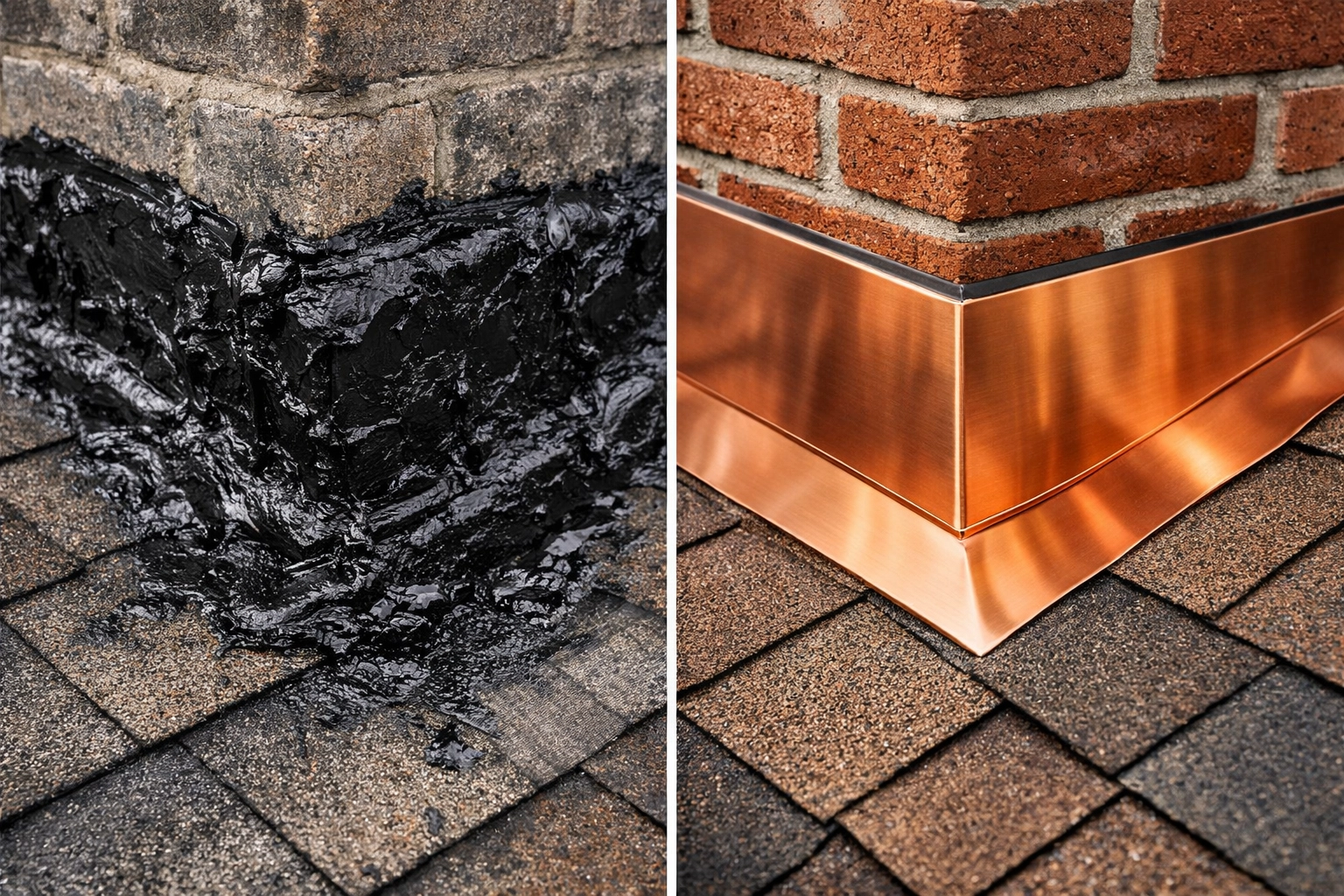
We call this the "Tar and Hope" method. Many improper roof repairs involve slathering a thick layer of black roofing cement (mastic) around the base of a chimney to stop a leak.
Why it’s a problem: Roofing cement is a temporary patch, not a permanent solution. Because chimneys and roofs move at different rates, the rigid cement eventually cracks. Once it cracks, water gets trapped behind the tar, where it can’t evaporate, leading to rapid rot of the roof deck.
Proper flashing relies on gravity and mechanical overlap. Water should run off the chimney, onto the counter flashing, over the step flashing, and down the shingles. If a contractor reaches for a caulk gun or a tub of tar before they reach for their metal snips, there’s a problem.
Mistake #3: Neglecting the Chimney Cap and Crown
Homeowners often focus entirely on the flashing at the roofline and forget about the top of the chimney. The chimney cap (the metal cover) and the chimney crown (the concrete slab at the top) are your chimney's first line of defense.
Why it’s a problem: If your chimney crown is cracked or your chimney cap is missing, water can pour down the inside of the chimney structure. This water often manifests as a leak around the flashing, leading homeowners to pay for flashing repairs that don't solve the root cause.
During any professional roof inspection, the technician should look at the entire chimney assembly from top to bottom. If the crown is porous, it will soak up water like a sponge, which then travels down into the house's framing. You can learn more about how we integrate these components into our roof systems here.
Mistake #4: The Missing "Cricket"
If your chimney is wider than 30 inches, building codes in most areas require a "cricket." This is a small, tent-like diversion structure built on the upslope side of the chimney.
Why it’s a problem: Without a cricket, the back of a wide chimney acts like a dam. Leaves, pine needles, and snow pile up there, creating a "dead valley." This trapped debris stays wet for days after a rainstorm, eventually eating through the metal and the shingles. Building a cricket ensures that water is diverted around the chimney and continues down the roof. If you have a wide chimney and your roof is flat behind it, you are at high risk for structural rot.
Mistake #5: Improper Shingle Integration
The beauty of asphalt shingles is their ability to shed water when layered correctly. However, the integration between shingles and metal must be precise.
Common Errors Include:
Improper Overlap: The shingles should cover the flange of the base flashing, but the step flashing must be "woven" between every single shingle course.
Nailing Too Close: Many DIYers or inexperienced crews nail the shingles directly through the flashing. This creates a hole exactly where water is most likely to flow.
Poor Cutting: Shingles should be cut neatly around the chimney to allow for a 1-inch "water channel" where the metal is visible. If the shingles are jammed tight against the brick, they will trap grit and debris.
For a look at what properly integrated roofing looks like, browse our contemporary homes portfolio.
Signs Your Chimney Needs Professional Attention
Most chimney leaks aren't "gushers." They are slow, silent drips that happen inside the walls. Here is what you should look for during your own visual check:
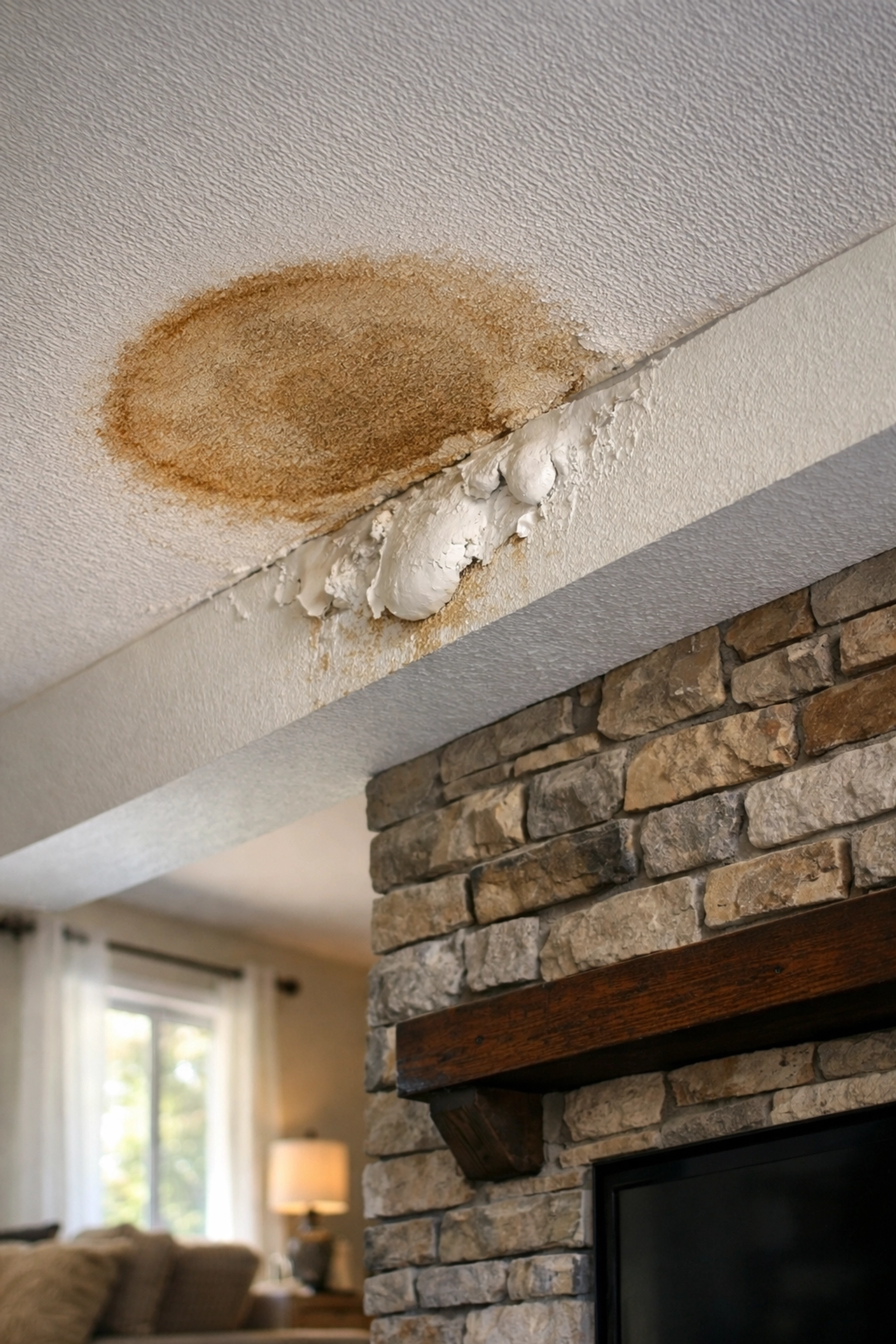
Interior Water Stains: Look for brown or yellow rings on the ceiling or walls near the fireplace.
Crumbling Mortar: If you see bits of brick or mortar on your roof, the masonry is failing, which will eventually pull the counter flashing loose.
Rust Streaks: If your flashing is made of galvanized steel and you see orange streaks, the protective coating is gone, and a hole is soon to follow.
Damp Firebox: If the inside of your fireplace feels damp or smells musty after a rain, water is likely entering through the top or the flashing.
The Xcel Roofing Approach to Precision Protection
At Xcel Roofing, we treat the chimney as the most critical part of the project. We don't believe in "quick fixes" or reused materials. Every chimney we work on is treated with a rigorous inspection process:
Full Tear-Back: We remove all old shingles and metal to inspect the underlying wood deck for rot.
High-Temp Underlayment: We apply a specialized ice and water shield around the chimney base that can withstand the heat of the masonry.
Custom Fabrication: We use high-quality, corrosion-resistant metals tailored to the specific dimensions of your chimney.
Expert Sealing: We use high-grade, UV-resistant sealants that remain flexible for decades, ensuring the seal moves with your home.
Whether you need a simple repair or a full system replacement, our goal is to provide peace of mind. We even offer financing options to ensure you don't have to delay these critical repairs.
Conclusion: Don’t Wait for the Drip
Chimney flashing is a small part of your roof, but it carries a huge responsibility. Avoiding these common mistakes: like reusing old metal or ignoring the chimney cap: can save you thousands of dollars in interior repairs and mold remediation.
If you haven't had your chimney inspected in the last year, or if you’ve noticed any of the warning signs mentioned above, it’s time to call in the experts. Protect your investment with precision craftsmanship.
Ready to secure your chimney? Contact Xcel Roofing today for a professional evaluation and ensure your home stays dry for years to come.

Comments