


Metal Roof vs. Asphalt Shingle: Which Is Better For Your Energy Bills in 2026?
In 2026, the cost of living and rising utility rates have made energy efficiency a top priority for homeowners. When it comes time to replace your roof, you are no longer just choosing a color or a style; you are making a long-term financial decision that will impact your monthly overhead for decades. At Xcel Roofing, we believe that transparency is the key to helping our clients make the best choice for their specific needs.
The debate between metal roofing and asphalt shingles often comes down to two primary factors: upfront cost versus long-term energy savings. While both systems offer reliable protection, their performance during the sweltering summer months and freezing winters differs significantly. In this guide, we will break down the data to show you exactly how each material affects your energy bills.
Understanding the Science: Solar Reflectance and Thermal Emittance
To understand why one roof is "cooler" than another, we have to look at two scientific concepts: solar reflectance and thermal emittance.
Solar Reflectance: This is the ability of a roofing material to reflect solar energy back into the atmosphere. The higher the reflectance, the less heat is absorbed into your attic.
Thermal Emittance: This is the measure of how quickly a material radiates the heat it has absorbed. A material with high emittance will cool down faster once the sun goes away.
Traditional asphalt shingles act like a heat sponge. They absorb a high percentage of solar radiation, which then migrates through the roof deck and into your living space. Conversely, modern metal roofs are engineered to excel in both reflectance and emittance, providing a rigorous barrier against heat gain.
Metal Roofing: The 2026 Efficiency Champion
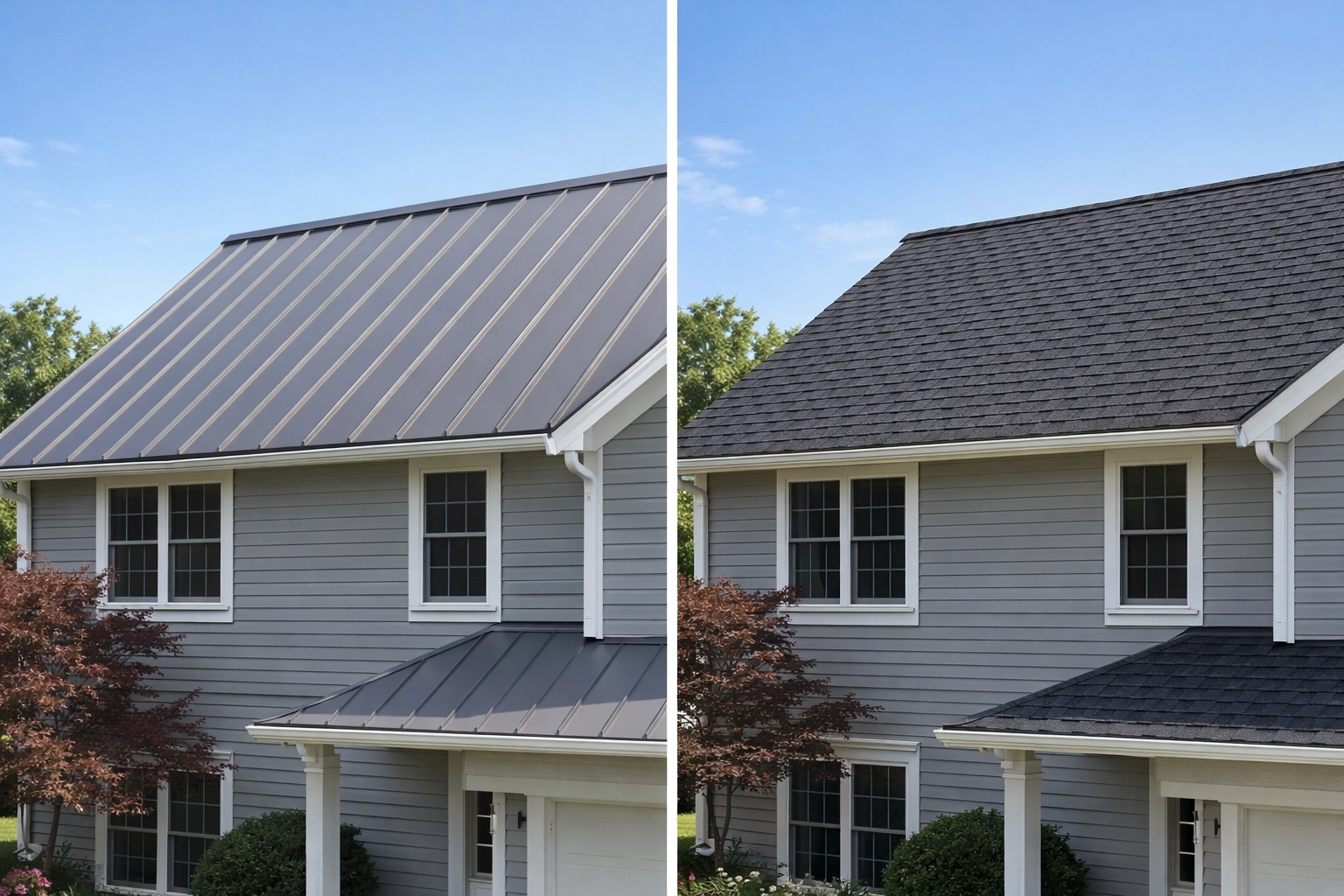
When it comes to reducing cooling costs, metal roofing is the clear leader. Research consistently shows that metal roofs are significantly more energy-efficient than their asphalt counterparts. In the peak of summer, a high-quality metal roof can reflect up to 70% of solar radiation.
Real-World Savings
Homeowners who switch to a metal roof system often see a reduction in cooling costs between 15% and 25%. In regions with intense sun exposure, those savings can climb as high as 30%. In terms of actual dollars, this typically translates to an annual savings of $200 to $500 on electricity bills.
Advanced Coatings
The secret to this performance lies in modern cool-roof pigments. Even darker-colored metal roofs in 2026 use reflective infrared technology. These special coatings allow the roof to stay significantly cooler than an asphalt roof of the same color. Whether you choose standing seam or corrugated metal, the energy-efficient properties remain a cornerstone of the material's value proposition.
Ventilation and Airflow
Many metal installations incorporate "above-sheathing ventilation." This creates a small air gap between the metal panels and the roof deck. This gap acts as a thermal break, preventing heat from transferring into the home. It is a precise engineering solution that provides peace of mind during record-breaking heatwaves.
Asphalt Shingles: The Practical Standard
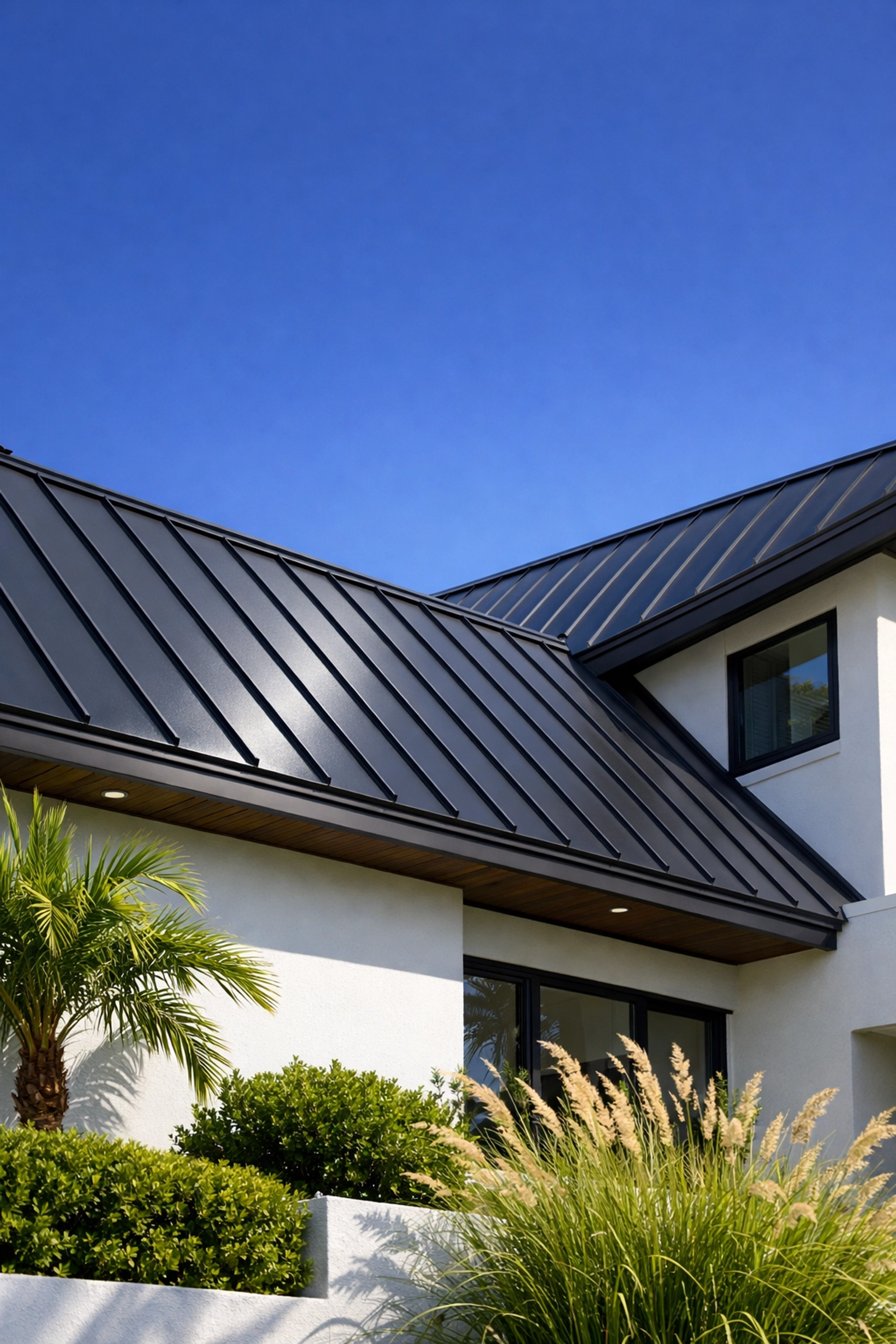
Asphalt shingles remain the most popular roofing choice in America because of their affordability and straightforward installation. However, from a strictly energy-focused perspective, they face inherent challenges.
The Heat Absorption Problem
Standard asphalt shingles are primarily composed of organic mats or fiberglass saturated with bitumen. Because they are dense and dark, they absorb solar radiant heat. On a 90-degree day, a traditional asphalt roof surface can reach temperatures exceeding 150 degrees Fahrenheit. This heat is then transferred directly into your attic, forcing your HVAC system to work overtime to keep your home comfortable.
The Rise of "Cool Shingles"
To combat this, manufacturers have developed "cool shingles" which use reflective granules. While these are a marked improvement over older shingle technology, they still generally fall short of the thermal performance offered by metal. They are an excellent middle-ground option for homeowners who want the aesthetic of shingles with a slight bump in energy performance.
The Long-Term Financial Breakdown: ROI in 2026
When evaluating energy bills, we must look at the total cost of ownership. A roof is a 30-to-50-year investment, and the math changes when you look past the initial installation quote.
The Upfront vs. Lifecycle Cost
It is no secret that a metal roof requires a higher initial investment. However, when you factor in the annual energy savings of $300 (on average) and the fact that a metal roof can last 50 years or more, the ROI becomes clear.
An asphalt roof typically lasts 15 to 25 years. This means that over the lifespan of one metal roof, you might have to replace an asphalt roof twice. When you add the cost of two roof replacements plus the higher energy bills over 50 years, the "cheaper" asphalt option often ends up being more expensive in the long run.
Financing the Future
For many of our clients at Xcel Roofing, the barrier to a metal roof is the initial price point. This is why we offer flexible financing options. By spreading the cost of a high-efficiency roof over several years, homeowners can let the monthly energy savings help pay for the roof itself.
Quick Tips: Which Roof Is Best For You?
Choosing between these two materials depends on your specific goals and how long you plan to stay in your home.
A Metal Roof is "Best For" you if:
You plan to live in your home for 15+ years.
Lowering your monthly utility bills is a top priority.
You want a "one-and-done" solution with minimal maintenance.
You are looking for maximum protection against storm damage and hail.
Asphalt Shingles are "Best For" you if:
You have a strict immediate budget for the project.
You plan to move or sell the property within the next 5 to 10 years.
You prefer the traditional architectural look of shingles for your neighborhood.
You are looking for the fastest possible installation turnaround.
Maintenance and Reliability
Energy efficiency isn't the only way a roof saves you money. Maintenance costs and the ability to withstand extreme weather play a massive role in your total expenses.
Metal Durability: Metal roofs are naturally resistant to wind, fire, and moisture. They require very little upkeep. Occasional inspections of the pipe flashing and chimney caps are usually all that is needed to ensure a lifetime of performance.
Asphalt Maintenance: Shingles are more susceptible to wind uplift and "granule loss" over time. After a major storm, asphalt roofs often require minor repairs to replace missing or damaged tabs to prevent leaks.
At Xcel Roofing, our portfolio of projects showcases successful installations of both types across various climates. Whether it’s a specialty double lock metal system or a premium architectural shingle, our focus is on precision and reliable performance.
Environmental Impact
In 2026, sustainability is a major factor in home valuation. Metal roofs are often made from 25% to 95% recycled content and are 100% recyclable at the end of their long life. On the other hand, asphalt shingles contribute billions of pounds of waste to landfills every year.
By choosing a metal roof, you are not only lowering your energy consumption (reducing your carbon footprint) but also ensuring that your roofing material will never end up in a landfill. This environmental consciousness is becoming a significant selling point in the modern real estate market.
Final Thoughts: Making an Informed Choice
There is no one-size-fits-all answer in roofing, but the data for 2026 is clear: if energy efficiency and long-term value are your primary concerns, metal is the superior choice. It offers a proven performance record of reflecting heat, lowering cooling costs, and providing unmatched durability.
However, asphalt shingles remain a reliable and cost-effective solution for many homeowners, especially when upgraded to modern reflective versions.
The most important step is to have a professional assessment of your current roof structure and your home’s attic insulation. Proper insulation and gutter systems work in tandem with your roofing material to manage the temperature of your home.
If you are ready to see the difference a high-efficiency roof can make for your energy bills, the team at Xcel Roofing is here to provide a thorough and expert consultation. Let us help you find a straightforward solution that fits your budget and protects your peace of mind.
Ready to start?Contact Xcel Roofing todayfor a free estimate and expert guidance on your 2026 roofing project.

Comments